Showing posts with label Historical Fiction. Show all posts

Monday, May 6, 2019

Top Ten Tuesday : Characters that Remind Me of Myself

Visual Description: Simple, clear font writing. 'top ten' (in pink, no caps). "TUESDAY" (all caps, bolded, colors alternating between yellow, orange, and pink). "www.ThatArtsyReaderGirl.com" (smaller font, in pink, at bottom).

Anne Shirley of Green Gables

Visual Description: A fiery red head tween girl with very messy braids and a messy flower crown on her head turns around and lifts a basket to someone and smiles a enthusiastic toothy smile. She is outside and wearing a plain brown dress. (Note: this is from the Netflix Anne series)
I was reading Anne of Green Gables books since I was probably...I want to say eight. I was a fast reader and voraciously devoured the books. She was an expression of my inner self and the vast imagination that I held inside my heart. She was the version of myself that I didn't feel comfortable or accepted in being in my real life. She was and is my literary kindred spirit. 

Jane Eyre

Visual Description: Screenshot from Jane Eyre 2011. Jane is standing in a golden field, its dreary but clear out, behind her is a stone estate home. She is wearing a blue cloak with her hands holding the hood in place over her head. She is wearing a somber, modest but expensive gown.

Jane Eyre, oh Jane Eyre. She is a part of me. She really is. Here are two quotes that convinced me that I have been a Jane Eyre in a previous life: 

“’I am not an angel,’ I asserted; ‘and I will not be one till I die: I will be myself. Mr. Rochester, you must neither expect nor exact anything celestial of me–for you will not get it, any more than I shall get it of you: which I do not at all anticipate.’”

“No sight so sad as that of a naughty child," he began, "especially a naughty little girl. Do you know where the wicked go after death?"
"They go to hell," was my ready and orthodox answer.
"And what is hell? Can you tell me that?"
"A pit full of fire."
"And should you like to fall into that pit, and to be burning there for ever?"
"No, sir."
"What must you do to avoid it?"
I deliberated a moment: my answer, when it did come was objectionable: "I must keep in good health and not die.”


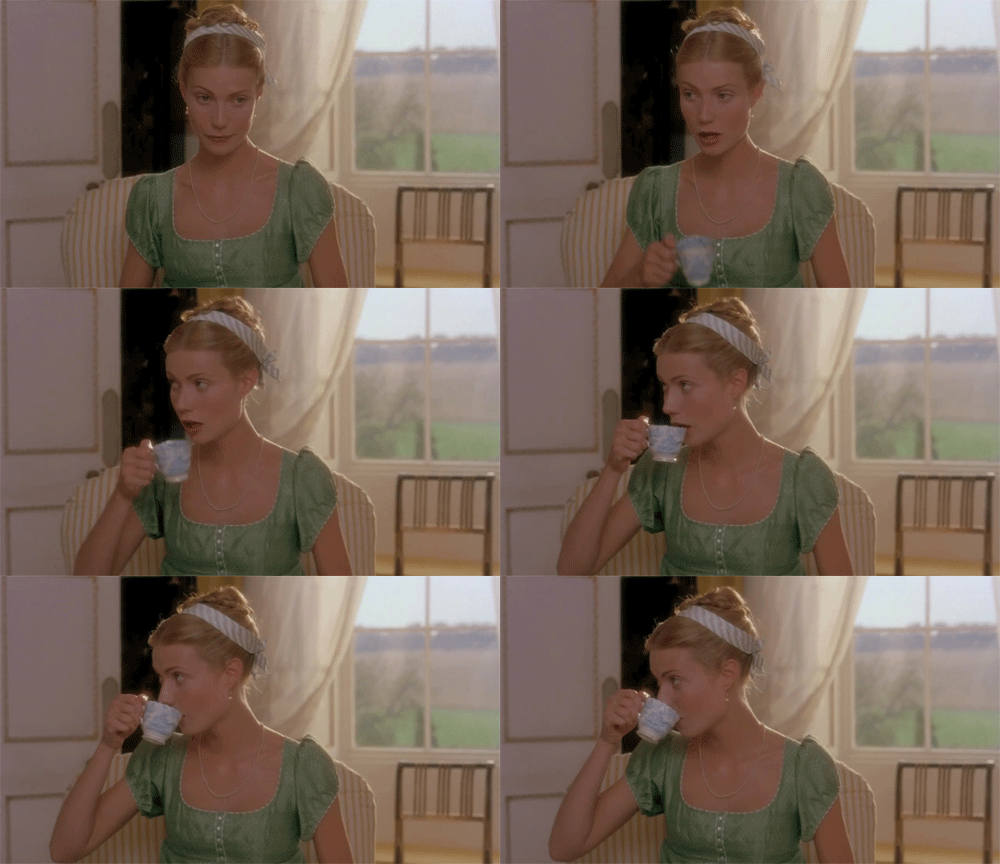
Emma

Visual Description: Emma (portrayed by Gwenyth Paltrow). A thin, golden haired beauty is sitting in a parlor (top half visible). She is wearing a pale sea green regency gown. She takes a sip from a teacup while turning her head to the left. It portrays a bit of sass and attitude. 
Ok so hilariously? I don't quite like Emma as much. She has always been one of least favorite of the Austen heroines. And, alas, according to the woman who gave birth to me and my very best friend - I am quite like her. Why? Because I'm a bit...bossy? Not bossy. No, never bossy. Just...I like to fix things and I express my opinions on how to accomplish the fixing of things very well. I also care a lot and I'm convinced that if my sisters just LISTENED to me then they would never have an issue. I'm also very independent and have a very close relationship with my father. 

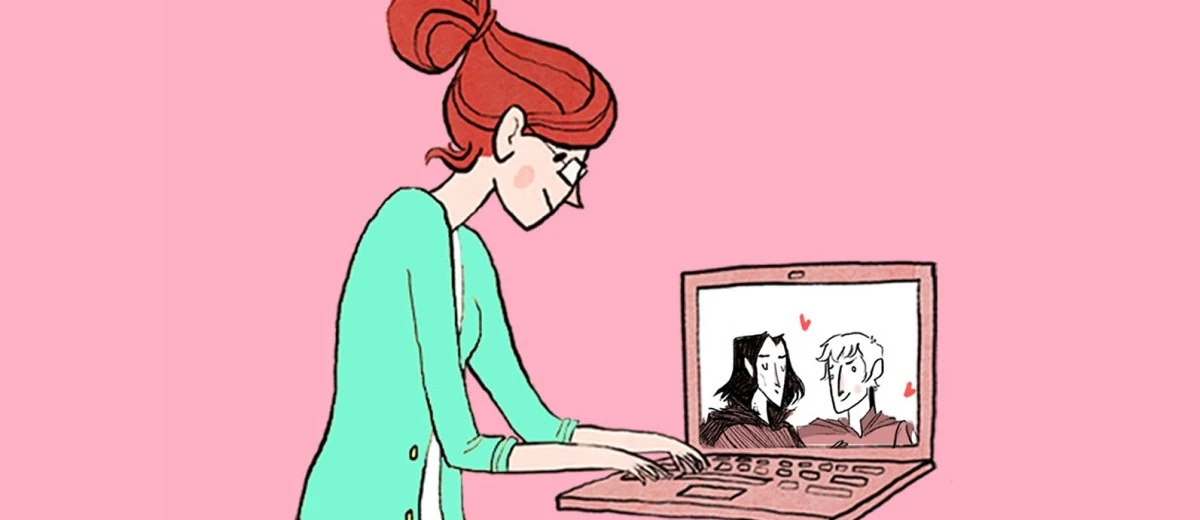
Cath from Fangirl

Visual Description: Illustrated cartoon image. Salmon pink background. A redhead young woman in a green cardigan, red hair tied back in a bun, and glasses is typing on a laptop with the image of two cartoon men on its screen. One has long dark hair and the other has light hair. Hearts are around them. 

Cath is a introvert, a fandom lover, a fanfic writer who dreams of being published someday, and she and I have a lot in common. She can be taken out of herself but only by the best kind of people. Again, she's close to her Dad. Like I am. And she and I have very similar social anxieties. Kudos to my best friend Madie for pointing her out for this list. 

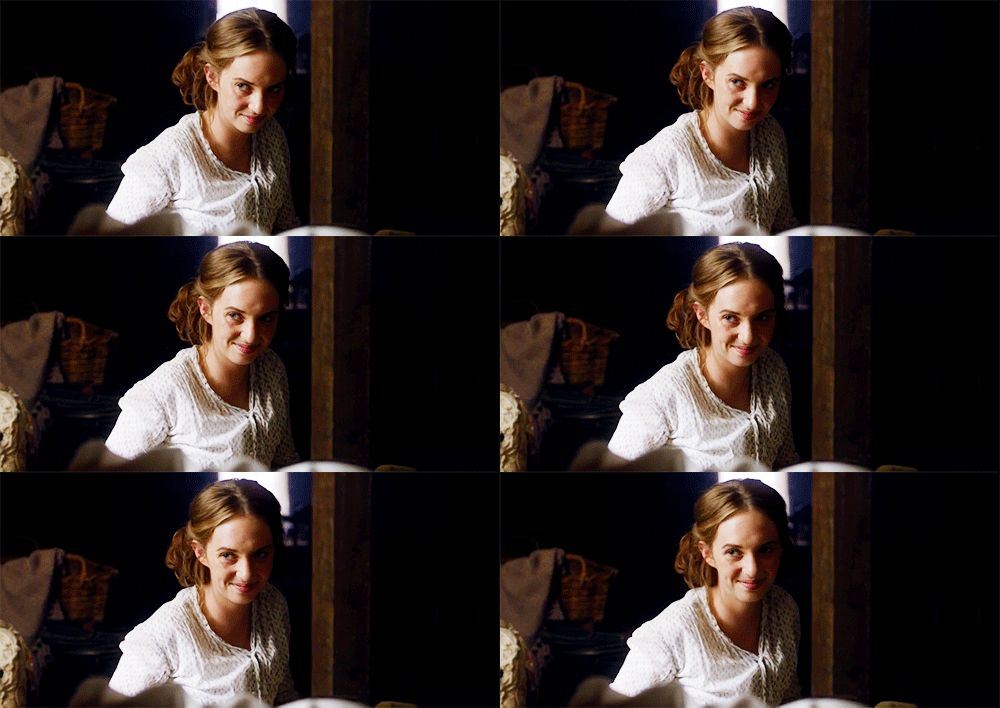
Jo March

Visual Description: Jo March (portrayed by Maya Hawke Thurman) is sitting on the floor of an attic. Dressed in a white nineteenth century gown, her messy light brown hair is pinned back at the nape of her neck, she is looking upwards and grinning at someone. 
Many times have my sister and I considered which March girl we were. I've always firmly believed she was a cross between Meg and Amy while I was a cross between Jo and Beth. However, over the years, I've become increasingly more Jo than anything else. Her feelings are my feelings, her desires are often my desires. So when I'm asked 'Which March Sister Are You?' - it's always Jo March. 

Caris Weaver from A World Without End

Visual Description: A long dark haired woman, her hair flowing down her sides, is strolling through a medieval market. She is wearing a plain off-white gown with a beige over-apron with flowers pressed into the fabric. A leather satchel is over her shoulder in a casual manner and a apple is in her hands and held in front of her. 
I love Follet's Kingsbridge Trilogy. Caris is a main character in the second one and she is so independent and driven. She is forced to become a Nun or be burned a witch and instead of giving up on her dreams she uses it to fulfill her goal to open up a hospital. Years later she defies everything and gives up the cloth to be with her one true love. Her legacy lives on the city. I might not be as fierce as she is nor as clever - I definitely am inspired by her and hope to have a small part of her tenacity inside of me. 

Agnieska from Uprooted 

Visual Description: A cropped and expanded picture taken from the cover of the book. A brown haired young woman with her eyes closed is leaning over a golden rose with vines growing from it. She has strong but gentle features and looks at peace. On either side of her are shelves. One has two green dragons poking their heads through. One has a open book with pages flying out. One has a hawk. And another had a golden haired lady in a white medieval gown with an outstretched hand towards her. 
Agnieska! One of my favorites! Her clumsy and emotionally based way of weaving magic and finding her way through dangerous ordeals with practical determination and intuition vibes with my own. She rather be comfortable than expensively clothed. She is the one person no one thinks would be chosen by the dragon or to have magic in her. But she is and she finds that she has a unique way of magic that ends of saving her home. And, while, I don't have a special kind of magic weaving ability inside of me - I do understand the way she sees and feels things out instead of subscribing to every letter and rule in the instructions. I work best that way too. 

This isn't ten but it's super late and I'm rather tired. So I'll leave it here. I can't wait to see what other people come up with! 

Until next time, 

Jess

Thursday, April 18, 2019

Another...Reading Round Up!

I'm feeling that it's time to do another reading round up! I've read several books over the past few months that I haven't blogged about. Perhaps because they're already established/well-known, I liked  them but didn't really feel like doing a blog on them, or I just was too busy.

Red Clocks by Leni Zumas

Visual Description: "Red Clocks" in a minimal white calligraphy font. Behind it is a flat, red diamond prism in various shades of red. It is a geometric symbol of the opening of a vagina. It reaches all the way up the top and bottom of the cover. Written in the same calligraphy font but in  yellow around the shape is :  "National Bestseller" across the top, Leni Zumas (Leni on one side of the top of the diamond, Zumas on the other). Bottom left 'A Novel' and on the other side a description "Strange and lovely and luminous. I loved RED CLOCKS with my whole heart - Kelly Link'. 
"Five women. One question. What is a woman for? In this ferociously imaginative novel, abortion is once again illegal in America, in-vitro fertilization is banned, and the Personhood Amendment grants rights of life, liberty, and property to every embryo. In a small Oregon fishing town, five very different women navigate these new barriers alongside age-old questions surrounding motherhood, identity, and freedom. Ro, a single high-school teacher, is trying to have a baby on her own, while also writing a biography of Eivør, a little-known 19th-century female polar explorer. Susan is a frustrated mother of two, trapped in a crumbling marriage. Mattie is the adopted daughter of doting parents and one of Ro's best students, who finds herself pregnant with nowhere to turn. And Gin is the gifted, forest-dwelling homeopath, or "mender," who brings all their fates together when she's arrested and put on trial in a frenzied modern-day witch hunt." - Nabbed from the Goodreads Blurb

I read this a few months ago - both reading it and listening to its audio-book. It was around the time that I was withdrawing from The Handmaid's Tale (the show) finale. It is a book that I would suggest to anyone who appreciates The Handmaid's Tale, for sure. But, unlike The Handmaid's Tale, the reality that is written in Red Clock's is far, far closer to our world. I find The Handmaid's Tale uncomfortable for it's closeness to our current political and social climate. Red Clock makes Handmaid's Tale feel more close to the world of The Hunger Games than ours. Scary. But, thought and feelings provoking. 

I refrained from blogging about it because I just didn't quite vibe with the writer's tone. I also had some problems with the characters. The Wife seemed extraneous to me. As for the writer's voice - I felt she was specifically taking on a masculine tone to prove something. I'm not sure. But, it didn't feel authentic. Mildly posing? I think this book would be great for a male reader and it's not surprising that The Punisher's Jon Bernthal tweeted his book love for 'Red Clocks'. It seems like JUST the book to reach through to the mind of a guy who inhabits Frank Castle so easily. 

The problems addressed in the plot are real and reaching. I thought the conclusion was satisfying and the decisions (from my fading memory of the plot) made by the characters were in-character and understandable. 

My personal opinions on writers tone and character placement wouldn't be everyone's reaction. That is why I'm starting this particular Reading Round up with it. It's a strong book and worthy of throwing out there as a book suggestion. 
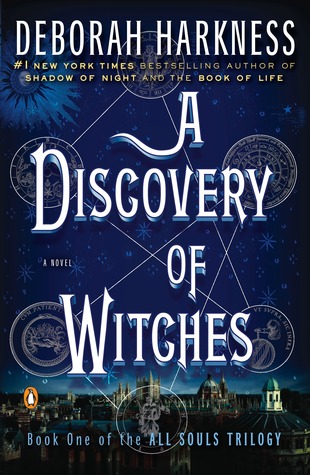

A Discovery of Witches by Deborah Harkness


Visual Description: A mystical, midnight cover. The background is in shades of midnight blue and darkness. The nighttime sky with light esoteric circle symbols with lines drawn to each other etches in front of it takes up 80% of the background. The lowest bottom part is a nighttime cityscape (probably London). The title is in large white slightly older feeling font in the center of the cover. Above, in simple straight font is "DEBORAH HARKNESS", below that in a smaller yellow font : "1 New York Times Bestselling Author of Shadow of Night and The Book Of Life"
"Deep in the stacks of Oxford's Bodleian Library, young scholar Diana Bishop unwittingly calls up a bewitched alchemical manuscript in the course of her research. Descended from an old and distinguished line of witches, Diana wants nothing to do with sorcery; so after a furtive glance and a few notes, she banishes the book to the stacks. But her discovery sets a fantastical underworld stirring, and a horde of daemons, witches, and vampires soon descends upon the library. Diana has stumbled upon a coveted treasure lost for centuries-and she is the only creature who can break its spell." - Nabbed from the Goodreads Blurb.

A Discovery of Witches quickly falls into the category of "It's already so well known and has been for a long while, I felt redundant and late in the game in blogging about it". However, the love I have for this book and the two books that come after it in the All Soul's Trilogy is VERY real and I can't help but share it here. 

Vampire romance is not a ground-breaking genre. It's not even a genre that has ever really gone out of style. It's been around and will always be around. Even when you go through the inevitable post-Twilight detox and can't imagine ever reading another vampire fiction again - you still find yourself intrigued by the premise. But, alas, some (a lot) of vamp fics out there are...horrible, lazy, trope-ish, and wrought with mary-sues. A Discovery of Witches does not at all fall into that category. 

It is so intelligent, emotional, and refreshing. Marrying science and copious amounts of luxurious history and the metaphysical into a tale with it's own original lore that resides in our own normal, mundane world so easily that it's curious to imagine it's legitimate. Diana is a convincing, refreshing heroine and while I had some annoyances with the male lead - he was swoon worthy and original. Diana has a history, interests, passions, and personality traits. So does Matthew (male vampire lead). 

A Discovery of Witches reminds me a great deal of Outlander. Mostly because the author is a historian who actually found a long lost alchelmical manuscript in the Bodleian Library in Oxford - just like her main character. She draws on her vast education and experiences and passions to weave the tale. The story is mature, deeply intelligent, intense and sexual (but doesn't stray too far into Anne Rice territory). Very Gaboldon-esque of her, right? 

The next two novels in the trilogy hold up and I loved everything about it. Also - it was adapted into a TV show and can be found on Sundance or Shudder. Season 1 covered A Discovery of Witches, Season 2 looks like it will jump right into the second novel. While the show was great and I'm tempted to do a book-to-screen post about it, I must insist that you read the books first. 

Because they are awesome. Super, duper awesome. And I just typed 'super, duper'..and you know what? I'm going to leave it there. 

A Strange, Scottish Shore by Juliana Gray


Visual Description: This is a illustrated cover with the artwork heavily featured and explanatory of the premise. A dark haired woman in a gray, plain Victorian-esque travelling attire and a gray hat with a ribbon ta the back is standing on a grassy rise with her back turned to the viewer, two suitcases in her hand, and the wind pulling back her neat hairdo and hat ribbons. She is looking towards a castle on a cliff on the sea, the ocean shore calm in front of her, a small boat moored on the beach. Clouds build in the background but the day is clear and the sun is setting. The title in simple, old-tymey print features at the top "A Strange Scottish Shore'. At the bottom is the author's details in large and small white fonts "Juliana Gray", "Author of A Most Extraordinary Pursuit". And a small quote clip in black font where the shore is detailing "A heroine worth rooting for. - Deanna Raybourn, New York Times bestselling author." 
"Scotland, 1906. A mysterious object discovered inside an ancient castle calls Maximilian Haywood, the new Duke of Olympia, and his fellow researcher Emmeline Truelove, north to the remote Orkney Islands. No stranger to the study of anachronisms in archeological digs, Haywood is nevertheless puzzled by the artifact: a suit of clothing, which, according to family legend, once belonged to a selkie who rose from the sea in ancient times and married the castle’s first laird. But Haywood and Truelove soon discover they’re not the only ones interested in the selkie’s strange hide, and when their mutual friend Lord Silverton vanishes in the night from an Edinburgh street, the mystery takes a dangerous turn through time, which only Haywood’s skills and Truelove’s bravery can solve…" - Nabbed from the Goodreads Blurb

OK SO THIS BOOK WAS SO GOOD I DIDN'T REALIZE IT WAS THE SECOND IN A SERIES UNTIL I WAS HALF WAY THROUGH IT. And I have, alas, been unable to procure the first one without purchasing it and I have too many books on my TBR list to justify buying it. 

This came up for me when I looked up 'selkies' in my library's app search. I love selkies. I think they are a deeply under-rated fantasy/supernatural/magical creature. They deserve so much more than what they get. I love history (as I think I've made clear in this post and previous posts) and so I picked it up and started reading it. Within the first chapter I realize that this chick is literally talking to the ghost of THE QUEEN OF ENGLAND in a train car. Like, what?! I was hooked.

Emmeline Truelove is a lovely main character and her voice is realistic for the times but earthy and understandable. Sometimes, in the era that she lives in, the narration can be a bit pompous or distant. Like, the author is trying too hard to emulate the times or doing an impression of someone in that era? But, she's a prim and proper heroine that you root for! 

I can't reveal too much about the story without giving major spoilers away and I don't want to do that. But, I can say it was a great ride of a read and the surprises were amazing. I encourage you to read the first book in the series, though. It's always better. And I feel confident from my experience with A Strange and Scottish Shore that the first novel will be excellently written and worth recommendation. Furthermore, I am confident that there will be more books coming because there are some answers we need answering and that they too shall be excellently written. 

A Study in Scarlet Women by Sherry Thomas


Visual Description: Another cover where the illustration is heavily featured and explanatory of the premise! A young woman with dark hair pinned up and in a elegant, scarlet gown with a large, hooped, ruched skirt is on a doorstep lit by two old fashioned gas lamps. The night is misty and it feels like she's in the city. She is in mid-action of entering the door. It is cracked and golden light glows from inside. Gold fillagree emblems are in each corner of the cover. The author's name and details are in mid-large and small font above the doorway at the top of the cover. "USA Times Bestselling Author of My Beautiful Enemy", "SHERRY THOMAS". Below, the title in white and large font "A Study in Scarlet Women" and in smaller golden letters describing "First in the Lady Sherlock Series" at the bottom of the cover. A small quote clip in white is placed to the left beside her scarlet skirt detailing "Sherry Thomas has done the impossible and crafted a fresh, exciting new version of Sherlock Holmes." Deanna Raybourn, New York Times bestselling author."
"With her inquisitive mind, Charlotte Holmes has never felt comfortable with the demureness expected of the fairer sex in upper class society. But even she never thought that she would become a social pariah, an outcast fending for herself on the mean streets of London. When the city is struck by a trio of unexpected deaths and suspicion falls on her sister and her father, Charlotte is desperate to find the true culprits and clear the family name. She’ll have help from friends new and old—a kind-hearted widow, a police inspector, and a man who has long loved her. But in the end, it will be up to Charlotte, under the assumed name Sherlock Holmes, to challenge society’s expectations and match wits against an unseen mastermind" - Nabbed from the Goodreads Blurb.

Gender-swapped Sherlock Holmes for the win. Much like A Discovery of Witches - the premise has been done before. It's been done in TV. It's been done in books. It's been done in the past. And it has been set in the present. So, when I picked this up (after finally doing so after my library app kept throwing it me in suggestions for eons) to try it out  I was very surprised how original it was. 

I recently read somewhere that Sherry Thomas has said she enjoys writing the type of books she enjoys reading and it totally clicked with me. Because, A Study In Scarlet Women, she effortlessly slides into the role of narrator of a intelligent, Victorian who-dun-it with little hiccup. The whole book sets up the whole series. The twist upon the twist? Charlotte Holmes is the scarlet woman and she does so by pure genius choice. She is exactly what you would think a female Holmes would be but also not at all what you think. She's better. And her supporting characters are better. And the world she lives in and solves mysteries is better. 

It's a slow burn read and mystery, alternates point of views deliciously, and does not stray from spending time on mundane day-to-day things and societal expectations and rules. While male Sherlock Holmes didn't have to worry about conventions or societal pressures - Charlotte Holmes is highly pressured to do so. Her dream is to find an occupation where she does not have to marry and one that gives her enough income to support her two unmarried sisters. One of them mentally challenged and hidden away by their lacking, disappointing parents and the other older and very much a wallflower with a great big heart but not much backbone. Oh, and! - MRS. Watson is a retired actress of means! A Victorian-era ACTRESS. While Thomas definitely resides within the realm of the original Sherlock Holmes series, she gender swaps where necessary and adds her characters (mostly of the female kind) to flesh out the feminine world that was often overlooked in the original source material. 

And it works. Big time. 

Again - like A Discovery of Witches...I have read the other books in the series and each get a thumbs up from me and the series is well known and so I felt redundant in blogging about them on their own. However they absolutely needed to be mentioned.

And that, dear reader, concludes this Reading Round Up. 

We went from Red Clocks, to A Discovery of Witches, to A Strange and Scottish Shore, and finally to A Study in Scarlet Women. I feel like I've run a blogging marathon with all the links and covers and typing I've been doing the past day! I'm going to go listen to my most recent audiobook library loan and chill. 

Happy reading!

Until next time, 

Jess


Friday, February 8, 2019

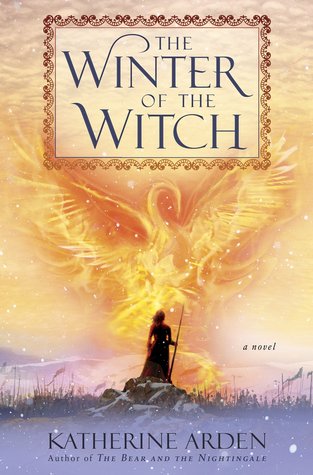
The Winter of the Witch by Katherine Arden


And so it ends.

This trilogy has meant so much to me. It has brought me so much joy and excitement. My love for reading started at a young age because books and stories transported me away to another world and relieved me of the stress of the real one I was living in. As I've gotten I've kind of lost that ability. I'm far too involved in adulting and other real life shenanigans to check out with a book like I did when I was a kid. But, every once in a while a book or two will grab me and keep me completely occupied long after I finish the final sentence. And with the Winter Night Trilogy - I got three books like that. I waited in anticipation for each new release. And when the final came (I got the ARC from Netgalley a couple of months before the formal release)....I found myself unable to pick it up and start it. Why? Because then it would be on its way to being over. But all things must come to an end,or so they say. More accurately - no amount of my epic levels of procrastination will stop the trilogy from coming its end and I wanted to read it and to be a part of it while it was a current discussion. I didn't want to be tooo late to the party.)

So without further ado..I bring to you my official review of the finale of the year.

Visual Description: This cover is primarily yellow, orange, and shades of wintery blue and lavender. The darkened silhouette of a young woman standing strong on a snowy boulder (her back to the audience) with a staff in her right palm. Ahead of her within her sight line are the silhouette of a medieval army. Rising above them is the pale but fiery image of a fire bird that is seemingly coming forth from her staff. It is the most striking image in the cover next to the silhouette of the young woman. Above these images bordered with old world filagree and written in blue "The Winter of the Witch". Below to the side of the woman in small italic 'a novel'. And below the woman and her rock, at the very bottom of the cover, is 'Katherine Arden. Author of The Bear and the Nightingale').
Publishing: January 8th, 2019, Del Rey
Pg Count: Ebook - 384 pgs


Following their adventures in The Bear and the Nightingale and The Girl in the Tower, Vasya and Morozko return in this stunning conclusion to the bestselling Winternight Trilogy, battling enemies mortal and magical to save both Russias, the seen and the unseen.Now Moscow has been struck by disaster. Its people are searching for answers—and for someone to blame. Vasya finds herself alone, beset on all sides. The Grand Prince is in a rage, choosing allies that will lead him on a path to war and ruin. A wicked demon returns, stronger than ever and determined to spread chaos. Caught at the center of the conflict is Vasya, who finds the fate of two worlds resting on her shoulders. Her destiny uncertain, Vasya will uncover surprising truths about herself and her history as she desperately tries to save Russia, Morozko, and the magical world she treasures. But she may not be able to save them all. - Nabbed from the blurb from Goodreads. 


We pick up straight away within the aftermath of the great fire. I was a bit surprised. I had it in my imagination that we would find her roaming the wintery Russia landscape on the back of Solovey as she had done so often in the book before. But, instead - she still has soot in her hair and everyone is scrambling to repair and assess and recover.

There is so much that happens within the first few pages of the book. I can't and won't give spoilers but your heart will literally be ripped apart from your chest and you will be sobbing within the first chapters. Like no joke. The Winter of the Witch will have the FULL RANGE of emotions fill every crack in your soul before it ends.

As before (and I deeply and heavily insinuate that you shouldn't even be reading this post if you haven't read the other two books in the trilogy and in fact should go right now and get which ever one is the one you need to read in order to get caught up like RIGHT now!) and in true Winternight fashion - we say hello to familiar friends and meet some new ones along the way. Arden dances a beautiful dance of revealing new things, meeting new creatures, and still keeping the old ones around. I think it would be easy to have the conclusion to any trilogy (or series) be confined to closing out storylines and drawing everything to a close without introducing anything new. But, this is Vasya and she attracts trouble and creatures to her like she is cheese and they are mice.

Vasya is as always a force to be reckoned with but finally SHE is the one reckoning with herself. She is the one who starts to be the dealer and not just the dealt. Grabbing the reins (no pun intended) and winging it is what she's done before. But she goes further than just grabbing the reins and hoping for the best. She begins to plan and to make deals and to exert and practice and explore her own power. In the end, she basically (as we all predicted) saves medieval Russia.

In The Winter of the Witch we finally meet Arden's end game goal - that big battle of Kulukovo against the tartars that has been foreshadowed, alluded, threatened, warned, and feared/desired since the start of the trilogy. Remember little Kolya and little Vasya playing battle against the tartars way back in The Bear and the Nightingale? Yea. It's been a-brewing since the start. And, in fact, it was her (Arden) absolute goal to get to that battle and make it not just about the unification and liberation of medieval Rus' but also a battle and reconciliation of the old with the new, the chyerti and the Church, Vasya against the way of life she is 'supposed' to inhabit (basically Vasya against medieval Rus' Patriarchy. It all comes to a violent head at the battle of Kulikovo.

The ending of the Winternight trilogy had a definite urgent pulse to it. More so than the other books. There were no significant lapses of times that wove like tapestry. It was all straight forward, hurtling towards the Battle of Kulikova. Which makes Arden's ability to introduce new creatures, lands, and ideas while closing out the old storylines even more admirable.

My only wish is that there would have been some visiting with her old village and with the siblings she left behind in the first book. Kolya and Olga were left behind and I missed them. To be truthful - they were better siblings to Vasya than Irina and Sasha. Irina and Sasha were caught up in politics and intrigue (not exactly their fault but of their choosing just the same) to be as good as a sibling as the sister and brother Vasya left behind. I wish we could have seen how they were turning out. I felt like there was a natural reason for Vasya to go back - to deliver their gifted niece to a safe place where she could grow up. But, that had to be sacrificed because there was a battle coming and there were things that needed to be done!

Everything that she foreshadowed or teased throughout the previous two books were tied up. Such as - where does the magic come from in Vasya's bloodline? Who was her great-grandmother? (My suspicion was correct!). And we get so much information with so much more adventure in store for Vasya that it breaks my heart that we won't be able to be with her through them. I'd love more Vasya. I'd ride to the end of the world and jump off in the name of seeing what was below if it was beside her.

I, of course, am giving this a five out of five rating. I love this book. I love this trilogy. I will continue to treasure it forever and ever and all that sappy book-loving jazz. Its bittersweet to find this particular story come to a close after it has given me so much joy. But, the magical thing about books? They don't change and they will always be there.

Until next time,

Jess

P.S. Have tissue ready because you will be bawling at the start and finish and in-between. But mostly the start and the finish. I had to literally stop reading and pick the book up later in the day I was crying so hard at the start. And in the end I  ended up listening to most of it on audiobook while clutching a dishrag to wipe away evidence of the sob-fest that was possessing my body.

Thursday, September 27, 2018

Autumn Time Reading

Autumn is here.

It's time for dying leaves, scalding hot drinks, graying skies, layered clothes. My favorite time of the years for all those things and so much more. I have some seriously summer-inclined friends and they lament the arrival of Fall because to them it means...Winter is Coming. However, I refuse to have such glass-half-empty look on it. I don't wish fall wasn't here - I wish it was longer. Much, much longer. Like as long as summer. Or better - winter! I live in Iowa. I'd take any other season longer than winter. Except maybe summer. I'm not a summer girl. It's so hot. And I wilt. And then I do wilting things like drooping until I melt like the wicked witch did when Dorothy attacked her with water. It's not fun. I am...I am a autumn time girl. Give me the rain. Give me the dead leaves. Give me the LACK OF INSECTS TRYING TO GET ME TO INHALE THEM AND/OR EAT MY BLOOD. But, I'm getting distracted and off topic. Ahem...

In honor of my favorite season I've accumulated a small but mighty list of some of my favorite autumn time reads. Books that are natural fits for when the leaves turn orange and the nights grow longer and the air gets nippier and I am my best self living my best life.


The Sugar Queen by Sarah Addison Allen

Visual Description: The top half has the image of a back of a woman in a red tank top, dark loose hair staring out of a open window with autumn trees. Beside her is an open book. She's sitting on what seems to be a window seat with purple pillows. Below, in the bottom half, with a background of orange is the title in cursive 'The Sugar Queen" with the author's name in smaller, white letters above. Golden filigree borders the title in the background. 

The first thought I had was of this novel. Sarah Addison Allen's super power is invoking the seasons and the natural world and tying them firmly with her character's world and development. I would also highly suggest reading First Frost, her sequel to Garden Spells for equal fall vibes. The Sugar Queen is a standalone and holds bittersweet and happily ever afters that is best read and experienced in the Fall. 


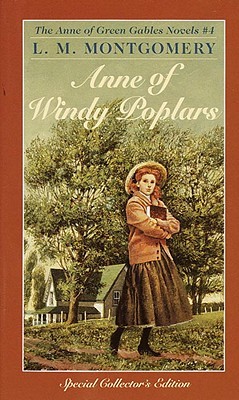
Anne of Windy Poplars by L.M. Montgomery

Visual Description: Anne, a redheaded young woman, is strolling down a path with her arms around books, gazing towards the reader. She is wearing a straw hat, a oversized orange cardigan, and a dark green-brown tweedish looking skirt. Behind her and down the lane is a white house with a green roof. Several very large windy-blown trees surround it. In white cursive and above Anne's head is 'Anne of Windy Poplars'. Above that in blue, smaller and simpler print is  The Anne of Green Gables Novels #4, LM MONTGOMERY. The cover is bordered in sold dark pumpkin orange. 

Everything about Anne-with-a-E screams love for autumn. What is that quote? Oh yes. "I'm so glad I live in a world where there are Octobers". I've read the entire series over and over again and out of the entire set - Anne of Windy Poplars, for me, is the most Autumnal. (With Anne of the Island a very strong second). Perhaps because it details her time as a teacher and the season of autumn is heavily featured. 


Frankenstein by Mary Wollstonecraft Shelley

Visual Description: Top half is a artistic painting of a shirtless pale man, with black shaggy hair, staring down at his reflection in a pool (his reflection is staring back up at him). Behind him is a black sky, a leafless tree, and a huge rock. Red poppies are strewn across the pool of water before him. The bottom holds the title and author with a background of black. MARY SHELLEY in orange, Frankenstein : The 1818 Text in white, italicized font. 

Well, I'm sure this is a no-brainer. You cannot live through an October or even a November without reading something classic and gothic and enthralling. With the new movie that came out about Mary Shelley, I've been feeling the need to re-read Frankenstein this season. 


A Wrinkle In Time by Madeleine L'Engle

Visual Description: The cover is artistically drawn. The center has the title "A Wrinkle in Time" and the author's name "MADELEINE L'ENGLE' above in front of a black night sky with tiny white star. the border of the book is made up of cartoons. Top of the cover: three children flying. Left A small house, a old lady in black witches attire, a old woman drawn with white and pencil, below a old woman in a a top hat and oversized coat and skirt and boots. Below golden plains and mountains with a trio of children on the back of a winged pegasus. Right is a very tall school with children walking towards it. In the bottom right is a golden sticker. 

Children's books are my favorite to re-read and A Wrinkle In Time is TOP on the list for me. While it spans across the galaxy and universe and encompasses many types of worlds let alone seasonal-types - it starts on a stormy autumn-y night. A wild night when all the things start happening. Curling up with this and a hot cup of cocoa or cider while the wind is blustering orange and brown leaves around....hmmmm...yes. That sounds exactly right to me. 


Visual Description: Emerald green background, "The Magician's Nephew' in large white, all caps front and center and below a medallion shape with a child in blue, with blonde hair riding a winged caramel colored pegasus just barely flying out of it. The green background lightens around the medallion shape as if the shape was glowing light. C.S. Lewis in all white caps but smaller than the title at the very bottom. 

Ok, this is set in summer time. And it might not be the most autumnal of reads. But, it's magical and the start of amazing, classic series. And to me, that makes it worth being on this list. Autumn is the best time to re-read your favorites and start a series to last you through the winter. Chronicles of Narnia is one of THE best series to have on your reading plate for the colder months of the year. 


Great Expectations by Charles Dickens

Visual Description: A painting of a large gate with two stone pillows. A foggy forest and green hills with a blue sky above lay beyond the gate. Below with a background of black states "Charles Dickens' in orange and in white, italics 'Great Expectations'. 

Speaking of re-reading...Great Expectations is dreary and spooky and heart-wrenching and classic. It's not quite as gothic and dark as Frankenstein but it's got that old Victorian gloomy tilt to it. And plus, well, Dickens. And reading (or re-reading) a Dickens novel is an excellent goal for every year. 


The Thief Lord by Cornelia Funke

Visual Description: The title in the center in all caps, slightly Renaissance-esque font 'THE THIEF LORD". At the bottom in a cursive, handwritten font the author's name "Cornelia Funke". The background is entirely blue and white to give the painting a twilight/midnight feel. It is the end of a canal of Venice. You see ab bridge between two narrow buildings. And an archway at the top with a mysterious figure capering over the top of the arch with the details of the body invisible against the light of a full moon in a starry night sky. 

Set in autumn-time Venice with a smattering of snow. The runaways fight runny noses while they follow their Thief Lord and the friendly Detective who loves turtles chases them around. Cornelia Funke has several books that are perfect for the season. But this one is my favorite. It's stand-alone, it's enchanting, and it utterly transports you to another world even though it's set in this one. 


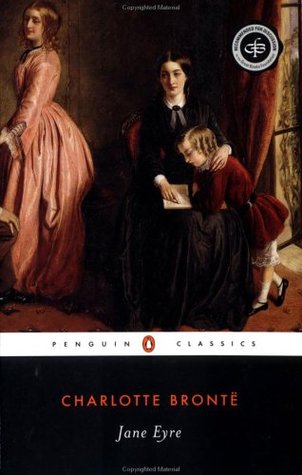
Jane Eyre by Charlotte Bronte

Visual Description: Bottom quarter is plain back with orange, all capital "CHARLOTTE BRONTE" and below white, italics title "Jane Eyre". Above is a classical painting. A a brown haired, pale sitting woman in a 19th century black gown with a white collar. She has a piece of paper on her lap and a child with ringlets and a red 18th century child's gown leaning over her lap and looking at it. To the left, standing is a golden haired woman in a rose 19th century gown with a bustle and lace. They are all posed in a corner by a window with large drapes where sunlight steeps in from. 

If you're new to my blog - oh hey, guess what? I love Jane Eyre. So I take any excuse to add it to a list or to mention it or to even think about it. If you're not into Jane Eyre then I encourage you to try it right now. It's part gothic, part romance, part female anthem of empowerment, and entirely classic. It's an invigorating read that, I believe, pairs well with walks in the park and tea. 


Blackbird House by Alice Hoffman

Visual Description: The background of the cover is a painting, very realistic that it seems almost like a photograph, except the softness of the hues. Old fashioned laced up red boots sit next to a roaring fire on a stone floor. The corner of a basket of what looks to be peaches or maybe bread next to it. The title is on top of the cover and in all capitals 'BLACKBIRD HOUSE' with 'A Novel' in smaller letters. Bottom part has the author's name 'ALICE HOFFMAN' with 'Author of 'The Probable Future' in smaller caps below it.

I checked this out as a audiobook on my library app last year and fell in love with it. Alice Hoffman is always a win, in my book. But, this one is special to me because it's a series of short stories but they all center around the same place and the people around this house. The Blackbird House. It's meandering and intimate at the same time and I love that kind of feeling in a book. It's why I treasure A Tree Grows In Brooklyn so much (it gets a honorary mention below!). And, of course, blackbirds - especially one in particular - soar in and out of the skies of the various stories. My favorite features the red boots which is central to the cover. Lots of possible-witchery happens, heart-warming charm, sad and melancholy resolution, happy and content endings. I really adored it and I think it fits well into the autumnal spirit of this list. 

Honorary Mentions! 


The Legend of Sleepy Hollow by Washington Irving. Harry Potter and the Prisoner of Azkaban by J.K. Rowling (my favorite HP!). Bram Stoker's Dracula. The Sleeper and the Spindle by Neil Gaiman. Coraline by Neil Gaiman. Ok...well...anything by Neil Gaiman. The Hobbit by Tolkien. The Book Thief by Marcus Zuzask. A Tree Grows In Brooklyn by Betty Smith. Uprooted by Naomi Novak. The Hounds of the Baskervilles by Arthur Conan Doyle. Murder on the Orient Express by Agatha Christie. 

I hope that this autumn is full of everything that you love about this season. I hope its crunchy underneath your boots, with lots of hot drinks that just only slightly burn the top of your mouth, rainy and blustery afternoons, nights that dip into freezing and bring frost to your windows just so you can trace happy faces on its surface, and I hope that you get many a-lazy hours to dive into each and everyone of these books to bring optimal autumnal reading glory into your lives. 

Until next time, 

Jess


Friday, September 14, 2018

Historical Romanticals

I have been crashing my way through a variety of books this summer. It's been in this book-bingeing summertime that I've rediscovered, to my great amusement, the historical romance. I love historical fiction. I love romance. The two combined is a no brainer, right? Yea, no. I've got to be in the right mood - no I'm not talking about that mood - for historical romance. Partly because I have to be in a amenable mood for inaccuracies for the sake of a breast-heaving, helpless, feisty damsels. I also have to be in the historical mood. It's one part fantasy mood and one part real world and then to top it all off - I must be in a wistful, dreamy heroes and heroine mood. Historical romance is one part dreamy, unrealistic fantasy and one part realistic, historicalness. I usually burn my way through it in a series of books and then move on to another genre. Historical romance isn't a genre I usually follow or get too vocal about. However, this summer I've discovered a couple of authors and books that I really wanted to share.


Image Description: Three covers, side by side. The first says "Romancing the Duke" and has a dark haired woman in a long red gown in front of a castle. The second says "When a Scot Ties the Knot" and features a woman in a pale green gown and pale brown hair playing with kilt of a sandy haired Scotsman who is not wearing a proper shirt. The third is called "A Lady by Midnight" and is a blue themed cover with a brunette woman in a gown of midnight blue laying down with a dark haired man on top of her. 

My favorite of the above covers happens to have the most salacious cover - A Lady by Midnight - however I found it to be the most heartwarming. So I guess, I really finally learn the whole 'don't by a book by it's cover. But, I can't help myself. Honestly I think that's this genre's most sabotaging feature. There's probably bunches of fabulous writers hiding under breast-heaving damsels clutching shirtless rakes in historically life-ruining poses. Which is one of the reasons I'm doing this post. Because I don't normally cover historical romances - well...these specific kind of historical romances.

Tessa Dare is probably well known. I checked these books out from my library's app and I had to go on the waiting list for two of them and one of her newer books (not released yet) already has a waiting list. Also - they have quite a few of her books on the digital library and that's a tell tale sign that the author or the series is a big deal since libraries can't just go buy a bunch of books nowadays and hope for the best. If they ever did that, ever. lol. Budgets. :/ But, I could tell that she'd be popular regardless of her presence on my library's digital e-book app. Because she's funny. And heartwarming. And she uses small animals and lovable supporting characters to flesh out the world. Like, in A Lady by Midnight - I was scouring her reading list for any hint that she had written more about a set of supporting characters introduced. It really felt like there should be. I really, really wanted there to be more, dammit. lol. The plots are usually well paced. And yes, there are some unrealistically bodice-ripping scenes but not to the point of over-doing it. It doesn't take over the ENTIRE plot line. Furthermore - in the 'Castles Ever After' series - the unrealistic premise nods to the very realistic societal and economical limitations a woman suffered in the chosen historical timeframe. This old man gifts each of his unrelated goddaughters with a Castle upon his death. Thus giving them a land and potential income and a home that is entirely their own. Which means...independence. None of them are willing to give this up and fight to protect it with fierce feminine awesomeness.

Lynsay Sands


Image Description: I'll just sum it up like this: Shirtless Scottish men in kilts. First one basking on a log entitled "Surrender to the Highlander". Second in a embrace with a busy brunette in a ravishing ruby, silk gown entitled "The Highlander Takes a Bride'. The third set in night time, his back to the viewer, he's leaning up against a stone wall looking brooding and emotionally tense - entitled "Falling for the Highlander'. 

HIGHLANDERS are basically like...honestly, I think...50% of the historical romance fiction output right now. And have been for like a long time. The biggest question I've wondered is if it was so saturated before Outlander hit the tv screen? I've always felt that I got my whole fill on the highlander romance because I've read and watched Outlander. But, I was cruising along on my binge-fest and was like...well, can't hurt to try, right? I was already down the rabbit hole of ravishing, heroic rakes and feisty damsels-in-distress.

Lynsay Sands is a positive that came out of my diving into romantic Highlander territory. I'm not entirely sure what era of time her Highlander and their Damsels are set in but I want to gander that's its before Protestantism became a huge thing because girls kept being almost sent to nunneries. And definitely before the Battle of Culloden (shout out out to Outlander for that piece of Scottish/English history!) because the Clans are still in place and active. Yet they reference an ominous 'King' every once in a while. 

Despite the ambiguous time era she sets her stories in - she does a great job in creating the realistic female character and their roles and limitations. Status of dowries are a big deal, their day-to-day activities and roles are in-character, they are literally trapped between a nunnery, goodwifery, or spinsterhood dependency. They are also unconcerned with sex (well, at least at first, lol) because back then - women were told that sex was a chore for babies and to make their husbands happy. They were coached early on (if at all!) that it was duty to perform. Marriage was meant to provide a position and an avenue for the source of love that women were allowed to be hopeful for - that of a child. I give her strong kudos for blending that in. With alot of historical romance female characters its like...."Have some realistic societal roles and limitations with all that fiesty, adventure-seeking, romping sexual independence". And with Sands's character's it's far more blended and realistic. They think like I could feel a woman who is independent and determined would think about their situations in that time. 

Oh, don't worry - there's plenty bodice ripping and ravishing adventuring to be read. To be honest, a little too much for my preference. But, there's also mystery, poison, great supporting characters (who seem to feature in other books too!), and comedic timing. 

Summary

Romantical Historical novels need balance. They need great supporting characters, a touch in someway to reality, and a plot outside bodice ripping and Era-innapropriate dalliances. They also need voice and they, and in some ways moreso than any other genre, really need that extra chemistry with the reader. Not THAT kind of chemistry. Although that is incredibly helpful for that particular genre. But the kind of charming chemistry a writer with that spark has with their reader.

So the next time you start jonesing for a little bit of historical romanticalness in your reading diet - try some of the titles in this post and rest in the knowledge that they've been fully vetted and are A+ Historic Romances. Only the best for you, dear reader. Only the best.

Until next time,

Jess
Friday, April 27, 2018

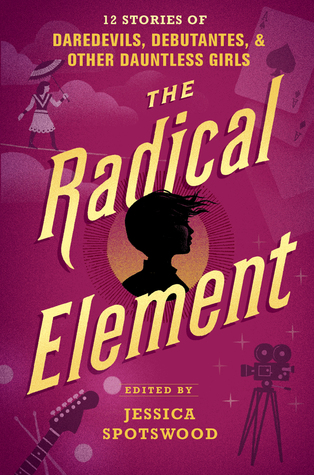
The Radical Element : 12 Stories of Daredevils, Debutantes, & Other Dauntless Girls


A purple cover with graphic designs of a girl in a dress with an umbrella, playing cards, old time film reel and camera, a guitar and clouds. In the center is a dark silhoouete of a girl's windblown head, she's looking off into the distance. The title is in gold. On very top "12 Stories of Daredevils, Debutantes, & other Dauntless girls. Center title (girls head between the tmwo words) 'The Radical Element'. Below 'edited by Jessica Spotwood'.

Publishing: March 13th, Candlewick Press
Pg Count: 320 pgs, hardcover
Find the Editor: goodreads

"To respect yourself, to love yourself—should not have to be a radical decision. And yet it remains as challenging for an American girl to make today as it was in 1927 on the steps of the Supreme Court. It's a decision that must be faced whether you're balancing on the tightrope of neurodivergence, finding your way as a second-generation immigrant, or facing down American racism even while loving America. And it's the only decision when you've weighed society's expectations and found them wanting. In The Radical Element, twelve of the most talented writers working in young adult literature today tell the stories of the girls of all colors and creeds standing up for themselves and their beliefs—whether that means secretly learning Hebrew in early Savannah, using the family magic to pass as white in 1920s Hollywood, or singing in a feminist punk band in 1980s Boston. And they're asking you to join them." - Nabbed from Goodreads Blurb

This is book two in the Tyranny of Petticoats series. I dearly hope that there are more books to come. I have loved historical fiction since I was a little girl and was introduced to The American Girl series and so this anthology series naturally has a special place in my heart. And I am pleased to be able to say that The Radical Element is just as great as it's predecessor. (link to my thoughts on the first book here). The Radical Element includes a variety of heroines, settings, and themes. Each author delivers. And the works combined create a multi-colored tapestry of the young, female face of American history. And the anthology includes in their diversity a face that is often over looked and especially so in American History.

The Disabled Girl.

It's only in the past decade or so that I've noticed a real turn in the way that persons with disabilities are portrayed and how much people are trying to actively represent people of all dis/abilities in their works. However, there's still quite a ways to go. Me Before You, anyone? (There's a reason this disabled girl has not blogged about that book on her book blog. lol). When I was a kid and my love for historical fiction was probably at it's apex - there weren't any disabled characters. Hell, there weren't many disabled characters ever. So to find in my hand an anthology that has intentionally main characters who are disabled and female and in history - well...my tween self was pretty damn excited. There was inner-tween squealing and hand clapping going on in the back of my head.

I appreciate that there is a representation of both a visible disability and a invisible disability. It's no spoiler since it's literally in the description blurb above ('balancing the tightrope of neurodivergence'). In years of never getting any representation and then to get it in one of my favorite genres...it makes me a happy girl. Both stories are void of any of the ableist traps. I won't lie - one is a bit cheesy, but I'll take it!

With short stories it's hard to give out information without giving out the majority of the plot..and essentially the whole story. I think with an anthology of short stories it's best if you keep it well...short! The anthology gives everyone a little bit of everything. It spans to the eighties. It is inclusive. You even get a little bit of each genre within the genre...with in the genre. Magical realism, mystery, law drama, etc.

The Radical Element continued to give me what I loved about the first installment and it gave me more.
And I want more. I think you'll want more too. And when I say I want more - I mean, I want more inclusion in the fiction I read. More accurate, un-ableist stories.

Until next time,

Jess 

Saturday, March 10, 2018

The Bear and the Nightingale and The Girl In The Tower by Katherine Arden


Maybe I'm naturally inclined to fall in love with stories of brave, magical girls in medieval worlds who are not the typical princesses or damsels. Now that I write that I'm thinking "Well, duh I love those kinds of stories. Why wouldn't I? WHO WOULDN'T?". I think a large majority of the books I love end up being brave, magical girls in faraway times and places. My Grammy asked over Thanksgiving last year...do you ever read non-surreal books? I had to think for a moment. I like what I like! Although, I should probably work on getting a little more variety in reading diet. It's just so hard when there are books like this out there. Actually - this isn't just a fantasy novel. It has history in it. It's set in Medieval Russia so yea...variety. 

There's a lot of parts and thoughts of my experience with the books that I want to share. I think it's safe for you to assume that I highly suggest that you read them. AND when you do so...know that they are part of a trilogy. The third and final installment will be released next year! 

I don't think the author meant to write a trilogy. The Bear and the Nightingale was her debut novel (neat note - she wrote it in Hawaii. Interesting since it's set in Russia and predominantly in the winter time). Bear and Nightingale could stand on it's own however its one of those novels in which finding out that there are more stories to be written makes you deeply, deeply happy as a person, a reader, and a human. 

And so, without further ado...I introduce the best damn thing I've blogged about all year. 

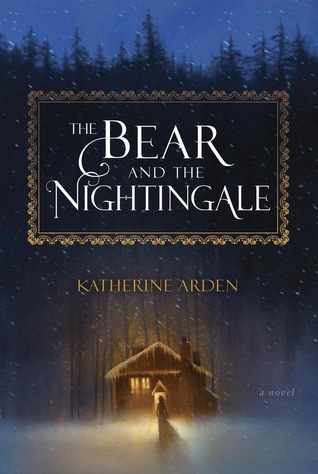
The Bear and the Nightingale by Katherine Arden


Visual Description: A wintery night-time forest (colored blue) is pictured with a mysterious glowing cabin and a figure of a girlish woman entering it.
Publishing: January 10th, 2017. Del Rey Books
Page Count: Hardcover, 322 pages.
Find the Author: website, twitter
"At the edge of the Russian wilderness, winter lasts most of the year and the snowdrifts grow taller than houses. But Vasilisa doesn’t mind—she spends the winter nights huddled around the embers of a fire with her beloved siblings, listening to her nurse’s fairy tales. Above all, she loves the chilling story of Frost, the blue-eyed winter demon, who appears in the frigid night to claim unwary souls. After Vasilisa’s mother dies, her father goes to Moscow and brings home a new wife. Fiercely devout, city-bred, Vasilisa’s new stepmother forbids her family from honoring the household spirits. The family acquiesces, but Vasilisa is frightened, sensing that more hinges upon their rituals than anyone knows. And indeed, crops begin to fail, evil creatures of the forest creep nearer, and misfortune stalks the village. As danger circles, Vasilisa must defy even the people she loves and call on dangerous gifts she has long concealed—this, in order to protect her family from a threat that seems to have stepped from her nurse’s most frightening tales." - Nabbed from Goodreads

We start out slow, drawing out the foundation and foreshadowing possibilities for extended story telling, and giving us enough time to feel the loss and tragedy of Vasya's tragic birth and her mother's decision. We meet her family before we even meet her. And it is this opening picture that sews the emotional core to the reader's subconscious mind. The span of time encompassed in this first book's plot is over sixteen years so while Vasya (Vasilisa) is just a little girl (getting into scrapes) we learn about the political and grown up decisions that lead her unfortunate step mother to be married to her father. Vasya's home is deep within the wilderness. Her Father is a a great Lord but in the first scenes he is in the stables helping an animal give birth to a baby.

Arden does an illustrious job of bringing feudal Russia alive for the reader. A giant oven with a bed over for it for the elderly and sick, descriptions of food (or the lack of it), women covering their hair, the use of a steaming bath house, dangers and lore of distant 'Tatars' invading, reverence of paint icons. A poetical voice lyrically and quaintly describes the world in a way that could only be described from someone who lived in that world. You forget that the author wrote this in Hawaii, had gone to college, grew up with TV and cereal for breakfast, and knows (I'm assuming!) how to work a microwave.

And the CREATURES...the magical, strange, ancient creatures! Everything it seems has a guardian or a creature of its own. A little stout man creature protects the hearth, a prophecy giving bathhouse spirit, a guardian caretaker of the horses in the stables. You will fall in love with them like I did. Russia folklore creatures are both fairies and goblins rolled up in one. Both terrible and endearing. Strange and familiar. Good and bad.

Family and the love that is held by Vasya's family is absolutely rejuvenating. From the premise and the death of her mother in the start you might naturally assume that Arden will follow the trope that Vasya is forlorn and unwanted by her family. Despite her step-mother's malice against her Vasya is given nothing but love and loyalty from her siblings - even from her half-sister (her step-mother's daughter). Her brothers protect and love her. Her father loves her and though his attempts might be stunted by his perceptions of the world and as it 'should be' - he loves her and that love is rarely if ever questioned by the audience. Her grandmotherly nurse Dunya is a mother and guardian to them all. Their home is cozy and warm because of the strength of their family.

And that warmth and strength is what keeps both Vasya and us readers going when the Vasya's world steadily becomes more narrow, more dangerous, and more mysterious. By the time we are in the middle of the book she is a strong-willed teenager who does not fit the cage that, as a woman of that time, she was born to, a Frost King has been seeking her since she was a girl, a Priest is obsessed with her, her tormented step-mother conspires against her, her Father wants to marry her off (apparently the Dad Solution of feudal Russia - get your daughter married so she'll settle down....it doesn't go as planned to NO one's surprise), and the ancient creatures that only Vasya and one other can see are warning of a Bear and it's awakening, and a horrible winter to come. And yes, she definitely inherited her mysterious grandmother's mystical abilities.

If I go further, I will give spoilers. And I don't want to do that. Not for the first book! So, go forth, read away!


Disclaimer: Spoilers (mild but telling!) lay below!

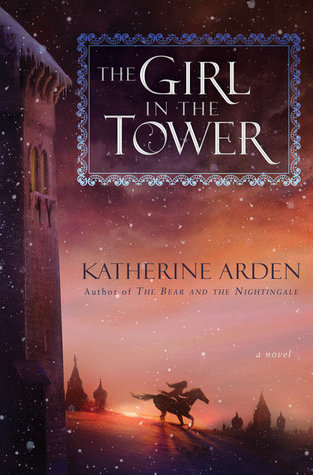
The Girl in the Tower by Katherine Arden


Visual description: A silhouette of a girl on a horse galloping down a slope. A large tower rises behind her and in the background the slopes towers of Moscow look hazy. The sun is rising in the background. Snow flake flurries dust the illustration. 
Publishing: December 5th 2017
Page Count: Hardover, 363 pages.
Find the Author: (same as above, lol)
"Orphaned and cast out as a witch by her village, Vasya’s options are few: resign herself to life in a convent, or allow her older sister to make her a match with a Moscovite prince. Both doom her to life in a tower, cut off from the vast world she longs to explore. So instead she chooses adventure, disguising herself as a boy and riding her horse into the woods. When a battle with some bandits who have been terrorizing the countryside earns her the admiration of the Grand Prince of Moscow, she must carefully guard the secret of her gender to remain in his good graces—even as she realizes his kingdom is under threat from mysterious forces only she will be able to stop." - Nabbed from Goodreads blurb.

She literally just unwittingly throws herself into the fire and then she realizes she's in the fire - she just keeps doing her thing. In 'Nightingale' (don't we love Solovey!?) though she was in danger - she was in the safety of her home. Sure, that home was surrounded by neighbors who called her a witch, the guardian spirits were dying, and vampires were literally rising up from the grave to claw at their door at night - but it was still home. The action, the stakes, the choices are far more daunting and heart-pounding. Little Vasya has grown up. She becomes a woman but on her own terms. And if you think the harshness of her childhood realities was heavy? It has absolutely nothing on Moscow. 

Like in the first book - we are introduced first to her family. In this case - it is her sister and brother (Olya and Sasha) in Moscow. Instead of one chapter - we spend a good chunk with them setting up the environment that we know that Vasya is destined to be in eventually. Women aren't just sheltered and covered - they are secluded, separated, partitioned away from the men. They can only go out to church and to visit to each other. If a woman was to step out of this norm - they would bring disgrace and ruin to their family and the repercussions could be a matter of home or no home. On the plus side - her niece sees a ghost of a mysterious girl wandering around. It turns out that Vasya is not the only one who inherited the mysterious grandmother's gifts.

There are new creatures and some familiar. Vasya has wholeheartedly accepted the mysterious, supernatural world that only she can see. She willingly wishes to learn about her gifts and uses her connection to the supernatural to save herself and others. Solovey is her constant and amusing companion. And whether he likes it or not - Morozco cannot help but watch over her.

The relationship between her and her siblings are more tense and partially questionable than we are used to. These siblings have lived in the dangerous world of Moscow and her appearance is dangerous and startling to their world. It's sad to see the stress between her and her siblings when in Nightingale the love she had for her siblings and that they had for her kept everything going in the darkest times. In the darkest times of this story - Vasya must rely on herself.

I can't go much further without giving away things I don't believe should be given away. 

The same illustrious voice narrates and weaves the new faces of feudal, medieval Russia and yet it matches the new daunting, adventurous pace. Where we spent a whole book to meander through her childhood and to set up her world in 'Nightingale' - we cover a few months in one book in 'Tower'. The tempo is like a fire. At first it's just a flicker, kindling, then it lights and the embers burn, and it slowly crackles and starts to light, and then all of a sudden - it takes off! And when it burns - it burns with passion, heartbreak, and magic. 

There's so many tidbits thrown out through the book - questions that are leading and need to be answered. Where does the magic come from? Her grandmother - who was she and who was her people? The legacy of a line of witches and the weight of being born different in a world where being different and a woman at the same time was considered a curse is explored. What will happen to Morozko when no one believes in him? Some questions are answered in this story and some are still yet to be faced...

So. Go read. It's worth it. 


Until next time, 

Jess

Sunday, September 3, 2017

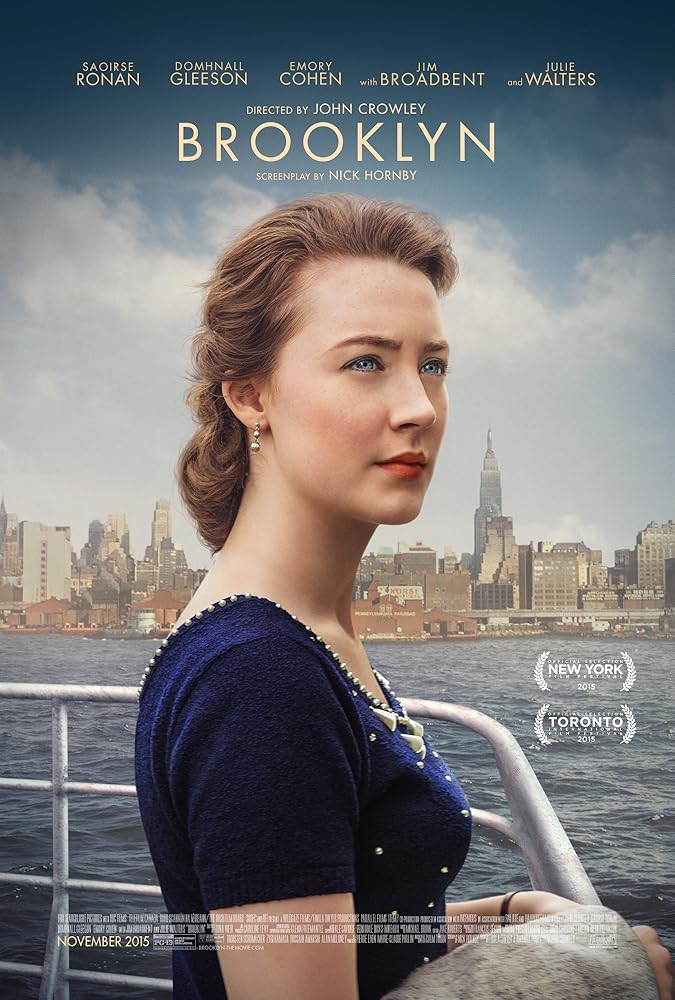
Book to Movie : Brooklyn

I'd like to say that I am the kind of reader that always finds and reads the book before they watch the movie. However, goals are meant to be a work in progress and that is definitely a goal. The best that usually goes down is me finding out a interesting upcoming movie is based on a book then putting said book on my endless TBR List and never getting to it until after I watch the movie because my goals are noble but I've got a patience problem. lol. This is basically what happened with Brooklyn. However, this is a weird once-in-a-rare-moon thing, in which...I like the movie better the book? As in...LOVE THE MOVIE...could barely finish the book.

Brooklyn


Both the book and the movie share the same plot. 
Blurb from the Book (Goodreads)
"Eilis Lacey has come of age in small-town Ireland in the hard years following World War Two. When an Irish priest from Brooklyn offers to sponsor Eilis in America -- to live and work in a Brooklyn neighborhood "just like Ireland" -- she decides she must go, leaving her fragile mother and her charismatic sister behind. Eilis finds work in a department store on Fulton Street, and when she least expects it, finds love. Tony, who loves the Dodgers and his big Italian family, slowly wins her over with patient charm. But just as Eilis begins to fall in love with Tony, devastating news from Ireland threatens the promise of her future" 
Blurb from the Movie (IMBD)
"An Irish immigrant lands in 1950s Brooklyn, where she quickly falls into a romance with a local. When her past catches up with her, however, she must choose between two countries and the lives that exist within." 
The movie blurb is decidedly less explanative than the book blurb but both plots are basically identical. There's the usual merging of common characters, blending of plot points, creative choices to accurately translate the written novel scenes to film that naturally happens when you go book to movie. But, the basic plot is identical. So why, on earth can I love the movie and not the book? 


The Book

I keep wondering why it received such RAVING reviews. If the movie hadn't happened, if Goodreads didn't have a bunch of 5-star ratings, if the critics weren't like - 'Yea, this one!!"...I would have probably chosen it but then put it back down. Novel Eilis blends into the background of her own story. She's the star yet..I don't really connect with her. It took me a while to figure it out but then it came to me...she has no personality. She's categorically a Mary Sue. Why, why, why did the author get such kudos for writing this? 

You could completely tell that it was written by a man. If he wrote under a gender neutral pen name I would still guess...written by a dude. There is little to no effort to get into the female perspective. His descriptions are one a man would make. Her emotions are flat, barely expressive, and when they are...they're meh. I wanted to ride along this ride with her...but I couldn't. 

This was just worsened by the ridiculously dull dialogue. I get it was the fifties and life was simpler. Talk was more formal and polite...but this was just weird. There was very little variation between the way the character's spoke. He had a huge list of possible dialects, attitudes, mannerisms to have fun with but failed to deliver at all. I mean, it's about Brooklyn...New York City. Her boyfriend was Italian American, her fellow boarders were young, independent women, she was Irish...and yet....nada.

I'm sorry but I have to go back to the written by the man thing. I've read lots of books where you get the masculine vibe from the narration but it didn't bother me. I think the reason it bothered me so much in Brooklyn was because the story could have, would have been something extraordinary.  Courage and resilience, homesickness slowly blending into finding-your-self, dealing with the double-standards and rigid confines of womanhood in the 1950's are common sense elements to write. Not just common sense - necessary to write a accurate portrayal of character's plot line. Her story was very real - as in...single, immigrant women coming to America on their own because home had no future to offer. It's a real, tangible story to write. He just completely failed. I haven't read any other of his books but it would disturb me if this is his perception of women. 

Eilis was SO PASSIVE. I don't feel like she genuinely felt attracted to Tony (her love interest). I don't think she really felt her choice at the end was THE CHOICE but more like the lesser of two evils. She is coddled and patronized (which I do understand is part of the way women were treated in the 1950s however...there is no depth to it), people always make her decisions for her, she is supposed to have all these emotions but does nothing substantial or moving with them. It's disturbing and patriarchal and completely out of sync to the beating, realness of a female main character.

Yea, I don't like the book. 

And I could go on and on about it. But, guess what? I LOVED THE MOVIE. And I much rather spend my brain energy writing about why I loved it and how it rocked my world than how much the novel sucked the soul out of my body through my completely appalled eyeballs. 

Please just throw out everything I just ranted about above and refresh your brain because it does not apply to the movie. At all. 

The Movie


First off, the most important aspect about the film is...Saoirse Ronan. 


She brought Eilis to life. Where in the book there is passivity - there is quiet watching, where there is no emotion - there are a thousand subtle emotions, where there is a cardboard personality - there's a statuesque, intelligent young woman with a heart of a girl next door. She is such a delight to watch in any film but this one has got to be my favorite of hers. She brings a subtle beauty and a stoic graceful charm to the plot. The story being told is a very simple, to the point story. It's rooted in a reality lived by many, many young woman through out recent history.

I think we like to imagine that immigrants, especially those who came alone, were scrappy and adventurous and chose to come to America because of the lore of the streets paved with gold. We neglect to remember that many of them came out of sheer need for a future in a desperate move at survival. Our movie Eilis lives in a small village where she has little to no prospects. No opportunity for a skilled job, no potential husband, a life destined to take care of her mother. Her sister, knowing that she's sick, wants Eilis to have a better future. So she does what big sisters do. She took charge and made things happen. Eilis is not a passive character but she does go along with things. Mostly because....who could turn down such an opportunity?

The movie follows the book closely from her rocky passage to her job and relationship with the Priest who helped sponsor her. But, with SO MUCH MORE. The true and honest truth that she just went along with what other people decided catches up to her and she gets brutally homesick. You can feel it in a visceral way that it is lacking in the depthless novel.

What I really appreciated about her journey was her independent sense of self. She receives a great deal of help from other people and she finds herself thriving. The help that she receives does not negate her. We all get a helping hand, we can get chances - it doesn't mean what we accomplish is anything diminished. Our movie Eilis is Captain of her Own Ship. Whether or not she initiated her voyage or was sent on it by others doesn't matter. Sometimes (this case in particular) a loved one needs to push you away from the dock before you can determine where you're going to go.

It's easy for stories to fall into the trap of "The Hero-Man comes, they fall in love, her happy ending tastes a little like settling but it's cool because you know..Prince Charming...right?" Considering the source material and the time period and the main characters gender it's mildly and perhaps completely miraculous that that ISN"T how the focused love story feels like as it unfolds.

Thus it would be completely remiss if I didn't acknowledge #TONYANDEILIS. #COUPLEGOALS.


I'll be damn if Tony isn't exactly what I would like from a suitor. He knows what he wants, affectionate, adorable, respectful - runs blocks in sewer-dirtied work clothes just to get you in time so you don't think that he blowing you off. Asks his little smart-ass brother for help in writing letters to you. Genuinely admires the kind of woman you are and wants to partner up with it - not squash it or take advantage of it. Yes, I know -- SPOILERS. They don't make 'em like Tony anymore. They really don't.

It's another testament to the strength and character of Soairse Ronan's acting capabilities. I don't think it's entirely contingent on her. You can't cover up a fake out happy ending with one strong woman's brilliant performance. However - she packs a hell of a punch. The entire spirit of the film felt authentic and real and realistic. It was a brilliant snapshot of a women's life in a time where women didn't have a lot of choices. Yet she was given many, yet she took them, and yet she found herself in a life that was aligned with who she was and what she wanted but in a place she had never imagined herself capable of being. It's a tangible fairy tale.


"And one day the sun will come out - you might not even notice straight away, it'll be that faint. And then you'll catch yourself thinking about something or someone who has no connection with the past. Someone who's only yours. And you'll realize...that this is where your life is." 

The most poignant and memorable and resounding quote from the end of the movie. It sums up Eilis and her journey. Because ultimately - the movie (and the attempt that was made in the novel, I believe) was about a young woman who didn't really want to go on a journey but she did and it was right and she flourished and sometimes..well...most times - you have to make that leap. You never know what's coming around the corner. You just never do. 

All in all? Don't waste your brain on the book. Rent the movie. Watch it a few times. And then go Tumblr the hell out of Eiris's gorgeous facial expressions and #EilisandTony.

Until next time!

Jess